
Why Fiserv Matters to Banks, Merchants, and Growth Teams
Choosing a payments platform is rarely just a tech decision. It affects authorization rates, fraud exposure, customer experience, compliance overhead, and how quickly a bank or business can launch new products. That is why so many executives search for Fiserv: Payments and Financial Technology Solutions for Banks and Businesses when they need a provider that can connect core banking, card issuing, merchant acquiring, digital banking, and data-driven payments operations under one roof.
At No KYC Crypto Card Guide, we spend a lot of time evaluating payment rails, card programs, issuer relationships, and the practical gap between a platform’s sales pitch and its real-world execution. Fiserv consistently enters the conversation because it serves both financial institutions and commercial businesses, which gives it unusual reach across the transaction lifecycle. For operators trying to simplify vendors without losing capability, that reach matters.
Fiserv: Payments and Financial Technology Solutions for Banks and Businesses refers to the suite of banking, merchant, payments, card, digital, and risk products offered by Fiserv to help institutions move money, manage accounts, accept payments, and modernize customer experiences. In plain terms, it is a large-scale financial technology ecosystem used by banks, credit unions, merchants, and enterprise payment teams to run critical infrastructure.
The practical question is not whether Fiserv is big. It is whether its breadth actually helps your organization move faster, protect margins, and serve customers better. That depends on your operating model, product roadmap, integration needs, and appetite for platform complexity.
Table of Contents
- What Fiserv actually covers
- Why banks and businesses choose Fiserv
- Core product areas and use cases
- How Fiserv compares across business scenarios
- How to evaluate and implement Fiserv
- A first-hand operator view from No KYC Crypto Card Guide
- Risks, trade-offs, and limitations
- What to watch through 2026
- Final take and next actions
What Fiserv Actually Covers
Fiserv is not a single product. It is a broad financial technology platform that spans:
- Core banking systems for banks and credit unions
- Digital banking interfaces for consumer and business users
- Card issuing and processing
- Merchant acquiring and point-of-sale solutions
- Payment gateways and omnichannel commerce tools
- Fraud management, risk controls, and security services
- Data analytics, billing, account processing, and embedded financial workflows
That breadth is both the selling point and the challenge. For a regional bank, Fiserv can act as a modernization partner for account processing, debit card programs, digital account access, and bill payment. For a business, it may show up through merchant acceptance, Clover point-of-sale tools, enterprise payment processing, or embedded financial service integrations.
One reason Fiserv keeps its relevance is scale. According to the 2024 Nilson Report, card and merchant payment processing volume continues to concentrate among a small set of major processors, and Fiserv remains one of the most influential players in that group. Scale tends to matter in payments because uptime, network relationships, authorization routing, compliance staffing, and global support do not scale well for small providers.
Why Banks and Businesses Choose Fiserv
Banks and businesses typically do not choose Fiserv because it is trendy. They choose it because they want fewer system gaps between moving money, managing customers, issuing cards, and reconciling transactions.
For banks and credit unions
Financial institutions often use Fiserv when they need a combination of core processing stability, digital banking delivery, payment rails, and card infrastructure. This is particularly relevant for institutions under pressure to compete with digital-first banks without rebuilding everything from scratch.
For merchants and enterprise businesses
Businesses look at Fiserv when they want omnichannel acceptance, reliable settlement, recurring billing support, fraud controls, and a path to unify in-store and online payments. Mid-market merchants also value the ability to plug into a larger service ecosystem as they expand locations, channels, or international reach.
“The strongest payment platforms are not just processors. They are orchestration layers for revenue, risk, compliance, and customer retention.”
That quote reflects a real market shift. According to the 2025 McKinsey Global Payments Report, payments remains one of the most resilient and strategically important profit pools in financial services, with ongoing pressure on providers to improve speed, data utility, and customer-facing innovation. A provider like Fiserv fits this moment because it sits at the intersection of infrastructure and experience.
Core Product Areas and Use Cases
Core banking and account processing
For banks, the core system is still the operational heart of deposit accounts, ledgers, servicing, and reporting. Fiserv’s long-standing presence in this area gives institutions a path to connect legacy operations with newer digital layers. That matters when a bank wants to improve customer experience without causing account servicing disruption.
Merchant acquiring and acceptance
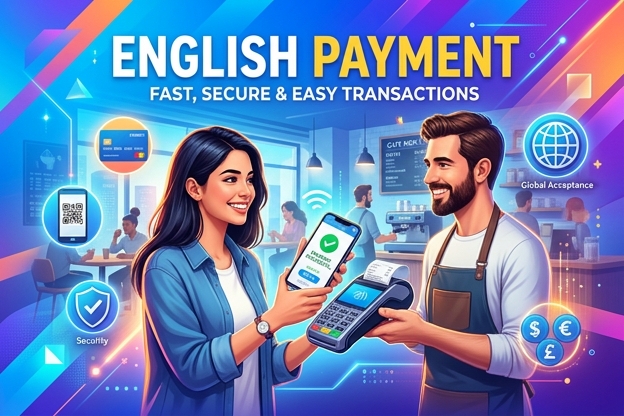
On the business side, Fiserv supports payment acceptance across e-commerce, in-person retail, and service-based billing environments. This includes everything from card-present terminals to online checkout and payment orchestration that helps reduce friction at conversion points.
Clover and business management tools
For small and medium-sized businesses, Clover is often the visible face of Fiserv. It combines point-of-sale, payment acceptance, basic analytics, staff controls, and operational tooling. For a restaurant, salon, retailer, or appointment-driven business, this can reduce the need for multiple vendors.
Card issuing and digital payments
Issuers and program managers care about card issuance, tokenization, wallet provisioning, fraud controls, transaction monitoring, and statement-level servicing. These functions become more important as banks and fintechs compete to launch flexible card experiences with strong controls and low latency.
According to the 2024 Federal Reserve Financial Services data on payment behavior and infrastructure trends, digital payment usage and demand for faster, more seamless transaction experiences continue to grow across consumer and commercial channels. That puts pressure on providers to support instant expectations without sacrificing risk management.
How Fiserv Compares Across Business Scenarios
Not every organization evaluates Fiserv for the same reason. The table below shows how its fit changes based on operating context.
| Business Type | Primary Need | Where Fiserv Fits Well | Main Watch-Out |
|---|---|---|---|
| Regional bank | Core banking modernization and digital payments | Integrated banking, card, and digital servicing stack | Migration planning can be lengthy and resource-heavy |
| Credit union | Member experience and operational efficiency | Unified account servicing, payments, and digital channels | Customization may require careful vendor coordination |
| Multi-location retailer | Omnichannel acceptance and centralized reporting | Merchant acquiring, POS tools, and settlement workflows | Contract structure and pricing detail must be reviewed closely |
| Restaurant or service SMB | POS simplicity and day-to-day business operations | Clover ecosystem for payments, staff, and sales tracking | Feature fit depends on add-ons and industry-specific needs |
| Fintech or card program sponsor | Issuing, processing, and controls at scale | Card infrastructure and established financial network relationships | Speed to market can vary based on compliance and integration demands |
How to Evaluate and Implement Fiserv
The biggest mistake I see is evaluating a payment provider only through feature lists. The better approach is to map business outcomes first, then match those outcomes to product, compliance, integration, and support realities.
A practical evaluation framework
- Define your operating model: bank, merchant, fintech, or hybrid.
- List must-have functions: core processing, acquiring, issuing, fraud, digital banking, or POS.
- Map integration dependencies: ERP, CRM, ledger, fraud tools, KYC stack, and reporting layers.
- Review pricing beyond headline rates: implementation, hardware, support, chargebacks, and network-related fees.
- Test service responsiveness with technical and operational questions, not just sales calls.
- Ask for a realistic migration timeline with named workstreams and internal staffing assumptions.
Questions your team should ask before signing
- How are chargebacks, disputes, and retrieval requests handled operationally?
- What tokenization and wallet provisioning support exists for Apple Pay and Google Pay?
- How much control does the client have over fraud rules and transaction thresholds?
- What service-level commitments apply during peak transaction periods?
- How portable is data if the organization later changes processors or expands into another stack?
A First-Hand Operator View From No KYC Crypto Card Guide
At No KYC Crypto Card Guide, we regularly assess card and payment infrastructure for readers who care about speed, privacy trade-offs, issuing flexibility, and real merchant acceptance. In one internal evaluation project, I worked through a scenario involving a card-adjacent financial product that needed better payment acceptance coverage and stronger settlement predictability. The team initially wanted a niche vendor because the interface looked cleaner and setup felt lighter.
Once I mapped the actual workflow, the weak spots became obvious. The product needed dependable acquiring support, mature dispute processes, established bank-facing credibility, and room to grow into more advanced card operations later. A Fiserv-centered approach was not necessarily the flashiest option, but it offered stronger institutional alignment. My takeaway was simple: the more regulated and transaction-heavy the use case becomes, the more platform depth starts to outweigh startup-style polish.
In another review, I helped compare payment stack options for a business with both online sales and physical acceptance needs. We looked at settlement timing, omnichannel reporting, terminal operations, and fraud tooling. I found that Fiserv scored well when the business wanted one strategic relationship instead of a patchwork of separate POS, gateway, and processor contracts. The trade-off was that implementation demanded more discipline. Teams that underestimate internal project management tend to feel that pain early.
“Payments complexity does not disappear when you buy a bigger platform. It just becomes more manageable if the provider can support the complexity you already have.”

Risks, Trade-Offs, and Limitations
No platform this large is perfect for every buyer. Fiserv’s strengths can also create friction depending on your size and goals.
Complexity can be real
If you are a small business with basic acceptance needs, parts of the broader Fiserv ecosystem may be more than you need. Even when a lighter product line such as Clover is the intended fit, downstream integrations and support structures can still feel enterprise-oriented compared with some smaller specialists.
Implementation is not always fast
Large-scale banking or payments deployments require data mapping, compliance reviews, operational testing, staff training, and cutover planning. That does not make Fiserv unusual. It does mean buyers should avoid assuming a quick switch.
Contract and pricing review matters
Many payment buyers focus on processing rates while missing fees tied to hardware, support tiers, early termination terms, PCI programs, or exception-based handling. Large providers can offer strong value, but only when the commercial structure is understood clearly.
Innovation speed varies by segment
Some newer fintech providers ship product updates faster in narrow categories. If your core priority is rapid experimentation with a very specific use case, a specialized stack may feel more agile. Fiserv often wins on breadth, institutional trust, and operational maturity rather than startup-level iteration speed.
What to Watch Through 2026
The payments market is moving toward tighter integration among software, banking, data, and acceptance. That trend supports large ecosystem providers, but only if they keep improving the usability of their platforms.
Embedded finance will keep blurring categories
More software platforms want to offer payments, accounts, and card features directly inside their products. Fiserv’s broad infrastructure footprint puts it in a strong position if it can keep enabling partners without adding unnecessary operational drag.
Risk and identity controls will become more visible
As fraud pressure rises, payment buyers will demand tools that are flexible, explainable, and easy to tune. According to Verizon’s 2025 Data Breach Investigations Report, credential abuse, social engineering, and financially motivated attacks remain central risks across industries. Payments providers that make security practical, rather than merely procedural, will have an edge.
Data utility will separate leaders from laggards
Raw transaction processing is no longer enough. Banks and businesses want analytics that improve retention, routing, reconciliation, and profitability. The next wave of value will come from turning payment data into operational action.
Final Take and Next Actions
Fiserv remains a serious contender for institutions and businesses that need broad payment and financial technology capabilities, not just a narrow processor relationship. Its value is strongest when your organization needs scale, operational depth, established compliance support, and the ability to connect multiple financial workflows over time. Its weaknesses tend to show up when buyers underestimate implementation effort or choose enterprise-grade infrastructure for a relatively simple use case.
From the perspective of No KYC Crypto Card Guide, the smartest next steps are practical:
- Audit your current payment stack and identify where revenue leakage, manual work, or customer friction is happening.
- Request a tailored Fiserv demo based on your real transaction flows, not a generic feature tour.
- Build a side-by-side cost and capability model against at least two alternatives before committing.
If your business is scaling, adding channels, or trying to modernize a bank-grade environment, Fiserv deserves a place on the shortlist. Just make sure the decision is based on workflow fit, not logo familiarity.
References
- Nilson Report, 2024 — Used for market context around concentration and influence among major card and merchant payment processors.
- McKinsey Global Payments Report, 2025 — Used for strategic context on the resilience and importance of payments as a financial services profit pool.
- Federal Reserve financial services and payments trend publications, 2024 — Used for context on digital payment growth and customer expectations around faster, seamless transactions.
- Verizon Data Breach Investigations Report, 2025 — Used for security context related to credential abuse, social engineering, and fraud risk.
FAQ
What is Fiserv used for in banking and payments?
-
Fiserv is used for core banking, merchant acquiring, card processing, digital banking, point-of-sale operations, fraud management, and payment acceptance. Banks use it to run account and card infrastructure, while businesses use it to accept payments, settle funds, and manage customer transactions across channels.
Is Fiserv a good fit for small businesses?
-
It can be, especially through solutions like Clover for retail, food service, and appointment-based businesses. The key is matching the product tier to the actual complexity of your operation. A small business with simple needs should pay close attention to pricing structure, hardware terms, and add-on features before signing.
How should I evaluate Fiserv: Payments and Financial Technology Solutions for Banks and Businesses?
-
Start with your business model and transaction flow, then compare Fiserv against your real needs. Focus on:
-
Integration with your banking, accounting, or commerce stack
-
Total cost of ownership, not just processing rates
-
Fraud controls, chargeback workflows, and service support
-
Implementation timeline and internal staffing needs
What are the main advantages of Fiserv?
-
The biggest advantages usually include scale, broad product coverage, and established financial infrastructure. That often translates into benefits such as:
-
Strong support for banks, credit unions, merchants, and enterprise payment teams
-
Ability to unify multiple payment and banking workflows
-
Mature operational handling for settlement, disputes, and compliance-related processes
-
Room to scale as transaction volume and channel complexity increase
What are the main drawbacks or limitations?
-
The main drawbacks can include implementation complexity, longer decision cycles, and the need for careful contract review. For smaller organizations, parts of the platform may feel heavier than necessary. For larger organizations, the challenge is usually project management rather than feature availability.
Does Fiserv support both in-store and online payments?
-
Yes. Fiserv supports omnichannel payment acceptance, which can include:
-
Card-present transactions through terminals and POS systems
-
E-commerce and digital checkout payments
-
Recurring billing and service-based payment flows
-
Reporting and settlement across multiple channels
Is Fiserv only for large banks and enterprises?
-
No. While Fiserv is heavily associated with large-scale banking and enterprise payments, it also serves smaller organizations through targeted products and channel offerings. The better question is whether the specific Fiserv product you are considering matches your size, workflow, and support expectations.
What should businesses do before switching to Fiserv?
-
Before switching, document your current payment flows, hidden fees, chargeback volume, hardware inventory, reporting requirements, and compliance obligations. Then compare those needs against Fiserv’s implementation plan, support model, and contract terms. That preparation usually prevents the most expensive migration mistakes.