
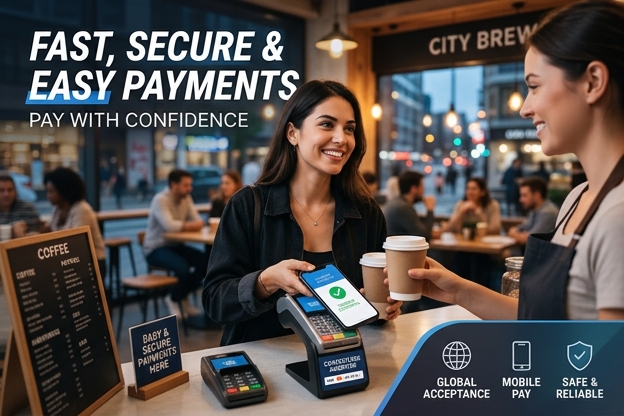
How Credit Card Processing Online Works: Fees, Security & Best Providers
If you run an ecommerce store, SaaS company, membership site, or digital service, payment friction hits revenue fast. Shoppers abandon carts when checkout feels slow, suspicious, or limited. Business owners feel the pain from the other side: rising processing fees, chargebacks, fraud reviews, account holds, and confusing contracts. That is exactly why How Credit Card Processing Online Works: Fees, Security & Best Providers matters for operators who want cleaner margins and steadier cash flow.
At No KYC Crypto Card Guide, we spend a lot of time evaluating payment rails, merchant risk controls, and provider reliability across both traditional card systems and newer payment alternatives. For many brands, the right online card setup is not just about taking payments. It is about conversion rate, fraud prevention, settlement speed, customer trust, and whether your processor still supports you when volume spikes.
Online credit card processing is the system that moves a card payment from customer checkout to merchant approval and final settlement. It involves a payment gateway, processor, acquiring bank, card network, and issuing bank, with each party affecting fees, speed, and risk controls. Choosing the right provider means balancing cost, security, integrations, and support for your business model.
Table of Contents
- What Actually Happens During an Online Card Payment
- The Main Players Behind Every Transaction
- Where Online Credit Card Processing Fees Come From
- Security Standards, Fraud Risks, and Chargebacks
- Best Online Credit Card Processing Providers by Business Type
- How to Choose the Right Provider
- Real-World Experience From No KYC Crypto Card Guide
- Common Mistakes That Raise Costs
- What Is Changing Through 2026
What Actually Happens During an Online Card Payment
Most merchants see a customer click “Pay Now” and a success page seconds later. Behind that simple moment is a chain of authorization, risk scoring, network routing, and settlement messaging.
Here is the simplified payment flow:
- The customer enters card details at checkout or uses a stored wallet like Apple Pay or Google Pay.
- The payment gateway encrypts the payment data and sends it to the processor or payment service provider.
- The processor forwards the request through the relevant card network, such as Visa, Mastercard, American Express, or Discover.
- The issuing bank checks available funds, card status, geolocation, velocity, and fraud indicators.
- The issuer approves or declines the transaction and sends the response back through the chain.
- If approved, the transaction is authorized immediately, but the money usually settles later in a batch process.
- The merchant receives funds, minus fees, according to the provider’s payout schedule.
The gap between authorization and settlement matters more than many merchants realize. A payment can be approved and still later face a dispute, reversal, or delayed payout if fraud signals increase or if your account enters manual review.
“The best checkout stack is the one customers barely notice and operators can fully explain. If your finance team cannot break down why a transaction cost what it did, you are probably overpaying.”

The Main Players Behind Every Transaction
To control payment costs, you need to know who gets paid and why. These are the core participants in online credit card processing:
- Customer: The cardholder making the purchase.
- Merchant: Your business accepting the payment.
- Payment gateway: The technology layer that securely transmits transaction data.
- Payment processor: The company handling transaction routing and operational processing.
- Acquiring bank: The bank that supports the merchant account.
- Card network: Visa, Mastercard, Amex, and Discover set network rules and pass messages between institutions.
- Issuing bank: The bank that issued the customer’s card and makes the final approval decision.
Some modern platforms bundle several of these functions together. Stripe, for example, combines gateway-like functionality, processing, tokenization, recurring billing tools, and fraud controls into one platform. Traditional merchant account providers often separate the gateway, processor, and account services, which can create more flexibility but also more complexity.
That complexity is not always bad. Larger merchants sometimes benefit from a modular setup because they can negotiate rates, layer in specialized fraud tools, or add local acquiring in multiple regions.
Where Online Credit Card Processing Fees Come From
Processing fees are rarely just one fee. They are usually a stack of charges from different parties. That is why a quoted “starting at 2.9% + 30¢” rate does not always reflect your effective blended cost.
Core fee categories
The three most common cost layers are:
- Interchange fees: Paid to the issuing bank. These vary by card type, transaction method, industry, and risk profile.
- Assessment fees: Charged by the card networks.
- Processor markup: The provider’s fee for handling the transaction and offering related services.
Other fees that hurt margins
Beyond transaction pricing, merchants often run into:
- Chargeback fees
- Refund processing costs
- Monthly platform or gateway fees
- PCI compliance fees
- Cross-border and currency conversion fees
- AVS mismatch or high-risk review fees in some setups
- Early termination penalties in legacy contracts
According to the Nilson Report’s recent industry coverage, card payment volume and fraud pressure continue to rise globally, which keeps risk costs front and center for processors. At the same time, merchants are seeing more variation between domestic debit, premium rewards credit cards, and international cards, all of which can meaningfully change effective rates.
For many small and midsize businesses, the real question is not “What is the cheapest headline rate?” but “What pricing model best fits our average order value, refund rate, and fraud profile?”
Provider comparison by business scenario
| Provider | Best For | Typical Pricing Style | Key Strength |
|---|---|---|---|
| Stripe | SaaS, startups, developer-led ecommerce | Flat-rate with add-on tools | Strong APIs, subscriptions, global support |
| PayPal | Small businesses and marketplaces needing brand trust | Flat-rate, often higher effective cost | High consumer recognition and wallet adoption |
| Square | Omnichannel retail, service businesses, simple setups | Flat-rate | Easy onboarding and unified hardware plus software |
| Authorize.Net with merchant account | Established merchants wanting a classic gateway model | Gateway fee plus processor pricing | Flexibility with multiple acquiring relationships |
Security Standards, Fraud Risks, and Chargebacks
Online card payments are convenient, but card-not-present transactions carry more fraud risk than in-person payments. That is why security controls are no longer optional. They are part of conversion optimization and account stability.
What security measures matter most
Strong online processing usually includes:
- PCI DSS compliance: The baseline security standard for handling card data.
- Tokenization: Replaces sensitive card data with a token so your systems do not store raw details.
- Encryption: Protects data in transit.
- 3-D Secure: Adds issuer-side authentication, which can reduce fraud and in some cases shift liability.
- AVS and CVV checks: Basic but still useful card verification layers.
- Behavioral fraud scoring: Reviews device, velocity, IP, email, BIN country, and purchase patterns.
The chargeback problem
Chargebacks are not just annoying deductions. They can trigger monitoring programs, reserve requirements, and even account termination if your dispute ratio gets too high. According to the 2024 LexisNexis True Cost of Fraud research, merchants still face a multiplier effect where every dollar of fraud creates a higher total cost after operations, replacements, and dispute handling are added in. That means your visible losses are only part of the damage.
Friendly fraud is another issue. A customer may receive the product, forget the purchase, dispute it anyway, and force your team into manual evidence collection. Digital goods, subscription billing, and cross-border sales are especially vulnerable.
“Fraud prevention that blocks good customers is just another form of lost revenue. The goal is not maximum rejection. The goal is smart approval.”
According to Visa’s ongoing ecommerce risk guidance and broad industry fraud reporting through 2024 and 2025, layered controls outperform one-size-fits-all rules. A blunt filter can lower fraud while crushing legitimate approvals. Better systems separate low-risk repeat buyers from suspicious first-time orders with mismatched signals.

Best Online Credit Card Processing Providers by Business Type
There is no universal “best” processor. The right fit depends on your sales channel, average ticket size, geography, technical resources, refund profile, and risk exposure.
Stripe
Stripe works well for startups, SaaS platforms, and ecommerce brands that want deep API access, recurring billing tools, and broad integration support. Its documentation is strong, and its global features are useful for businesses selling across markets. The tradeoff is that some merchants want more direct underwriting visibility and more pricing negotiation once volume grows.
PayPal
PayPal still converts well for many audiences because customers know the brand and trust its wallet checkout. It can be especially useful for merchants who sell to buyers hesitant to enter card details on unfamiliar websites. The downside is that cost can be higher than some alternatives, and account reviews can frustrate fast-scaling sellers.
Square
Square is attractive for businesses that need online plus offline payments under one roof. Service businesses, local retailers, and operators who want easy setup usually like its simplicity. Larger merchants may eventually outgrow the standard pricing structure or need more advanced routing options.
Authorize.Net and traditional merchant account setups
This route fits established businesses that prefer a dedicated merchant account and more control over gateway relationships. It often suits companies with finance teams that want detailed reporting, negotiated interchange-plus pricing, or multi-provider redundancy.
Adyen and enterprise-level options
For larger international brands, Adyen and similar enterprise processors can offer advanced routing, local acquiring, and unified commerce capabilities. These setups make more sense once transaction volume and geographic complexity justify the implementation effort.
How to Choose the Right Provider
Most businesses choose processors too quickly. They compare the homepage rate, skim the feature list, and miss the operational details that shape profit over the next year.
Questions that matter before you sign
- Is pricing flat-rate, interchange-plus, or custom enterprise pricing?
- How quickly do funds settle to your bank account?
- What fraud tools are included, and which cost extra?
- Are chargeback alerts or representment tools available?
- Does the provider support your platform, CMS, or billing stack?
- Can you accept international cards and local payment methods?
- Will your business model trigger reserve requirements or underwriting friction?
- How responsive is support during disputes or account reviews?
A practical evaluation framework
Use this short process before committing:
- Pull three months of transaction data, including average order value, refunds, declines, and chargebacks.
- Map your must-have features: subscriptions, wallets, invoicing, BNPL, multicurrency, or marketplace payouts.
- Get quotes from at least three providers using the same volume assumptions.
- Test checkout speed on mobile and desktop, not just backend features.
- Review contract terms for reserves, shutdown clauses, and dispute support.
Real-World Experience From No KYC Crypto Card Guide
When we reviewed payment pathways for content and affiliate-driven monetization at No KYC Crypto Card Guide, the main issue was not simply fee percentage. It was trust at checkout and processor tolerance for a business model adjacent to crypto education. Some providers were comfortable with informational content and standard card acceptance. Others flagged the niche too broadly and created unnecessary onboarding friction.
I saw this firsthand during one evaluation cycle. We tested a simpler wallet-heavy checkout against a more traditional processor with stronger fraud controls and cleaner billing descriptors. The wallet option initially looked better because setup was fast, but approval rates on certain international transactions were inconsistent, and dispute handling felt reactive. After shifting to a provider with better subscription management and more transparent risk tooling, we saw a healthier mix of approvals and fewer support tickets from users confused by statement descriptions.
In another project, I worked through a provider comparison where the lowest advertised rate ended up being the most expensive option in practice. Cross-border surcharges, currency conversion costs, and add-on fraud filters lifted the effective rate well above the quote. That experience changed how we assess vendors at No KYC Crypto Card Guide: now we model total payment cost by country mix, card type, and likely dispute volume before recommending any setup.
Those lessons matter for any publisher, SaaS brand, or online store. Cheap pricing on paper means very little if conversion drops, good orders get declined, or a support issue leaves revenue stuck in review.
Common Mistakes That Raise Costs
Some processing problems come from the provider. Many come from merchant decisions that create extra risk or reduce approval rates.
Frequent errors
- Using a weak checkout page with poor trust signals
- Ignoring mobile payment experience
- Skipping 3-D Secure where it makes sense
- Writing unclear billing descriptors that trigger friendly fraud
- Failing to send order confirmation, shipping, or renewal reminders
- Accepting international traffic without localized fraud rules
- Choosing a processor before understanding the business risk category
One of the biggest hidden mistakes is optimizing only for approval rate. If you approve too aggressively, fraud and disputes rise. If you block too hard, legitimate customers vanish. The right balance comes from monitoring:
- Authorization rate
- False decline rate
- Chargeback ratio
- Refund rate
- Effective processing cost
- Settlement timing
What Is Changing Through 2026
Online payments are moving toward more intelligent orchestration, stronger identity checks, and more flexible checkout choices. Merchants should expect three themes to shape decision-making through 2026.
More payment orchestration and routing
Larger merchants increasingly route transactions based on geography, issuer behavior, and cost performance. According to Gartner’s 2024 guidance on digital commerce technology trends, composable payment architecture and modular service layers are becoming more important as merchants seek flexibility and resilience. That trend favors businesses that want to avoid single-provider dependency.
Stronger authentication with less checkout friction
Issuers and networks continue refining risk-based authentication so secure transactions do not always feel burdensome. Better device recognition, tokenization, and wallet adoption can improve both fraud performance and conversion when implemented correctly.
More pressure on transparency
Merchants are getting less tolerant of vague fee structures and black-box risk decisions. The providers that stand out are the ones offering better reporting, dispute visibility, and clearer underwriting expectations. In practical terms, that means your processor relationship is becoming more strategic and less like a commodity utility.
Conclusion
Online credit card processing affects far more than checkout. It shapes customer trust, approval rates, fraud exposure, settlement speed, and your real operating margin. The best provider for your business is the one that matches your transaction profile, gives you enough security without crushing conversion, and stays reliable when your volume changes.
No KYC Crypto Card Guide recommends three practical next actions:
- Audit your last 90 days of payment data and calculate your true effective processing cost.
- Compare at least three providers on fees, fraud tools, support quality, and payout speed.
- Run a checkout optimization review focused on billing clarity, mobile flow, and dispute prevention.
References
- Gartner, 2024: Provided trend direction on composable digital commerce and modular payment architecture.
- LexisNexis Risk Solutions, 2024 True Cost of Fraud research: Supported the point that fraud costs exceed the face value of fraudulent transactions.
- Visa ecommerce risk and authentication guidance, 2024-2025: Informed discussion of layered fraud controls, 3-D Secure, and approval optimization.
- Nilson Report, recent industry reporting: Added context on rising card volume and ongoing fraud and processing pressure across the payments industry.
FAQ
How does online credit card processing actually work?
-
The payment travels from the customer’s checkout form to a gateway, then to a processor, card network, and issuing bank for approval. If approved, the transaction is authorized right away, then settled later, with fees deducted before funds reach the merchant.
What fees should merchants expect with online card payments?
-
Most merchants pay a blend of three core charges plus extra service costs:
-
Interchange fees paid to the issuing bank
-
Assessment fees paid to the card network
-
Processor markup charged by the payment provider
-
Possible add-ons like chargeback fees, cross-border fees, PCI fees, and fraud tools
Is online credit card processing secure for small businesses?
-
Yes, if the setup includes modern protections. Small businesses should look for:
-
PCI DSS compliance
-
Tokenization and encryption
-
AVS, CVV, and 3-D Secure support
-
Clear fraud monitoring and chargeback tools
Which provider is best for a startup or ecommerce brand?
-
It depends on business needs. A common pattern looks like this:
-
Stripe for developer-friendly ecommerce and subscriptions
-
PayPal for strong buyer recognition and wallet conversion
-
Square for businesses needing online and in-person payments together
-
Traditional merchant account setups for businesses that want pricing flexibility and more control
How Credit Card Processing Online Works: Fees, Security & Best Providers — what should I focus on first?
-
Start with the basics that affect profit fastest: your effective processing rate, your fraud and chargeback controls, and your checkout conversion rate. After that, compare provider support quality, settlement speed, and how well each platform fits your sales model.
Can chargebacks be reduced without hurting sales?
-
Yes. Strong merchants reduce disputes by tightening communication and verification rather than simply blocking more orders. Useful tactics include:
-
Clear billing descriptors on card statements
-
Fast order confirmations and renewal reminders
-
Risk-based fraud checks instead of blanket rejections
-
Easier refund handling before disputes escalate