

Card Issuing Starts With a Simple Question: Who Controls the Payment Experience?
Businesses that want to launch a branded card product usually hit the same wall fast: payments look simple from the outside, but the machinery behind them is layered, regulated, and expensive to get wrong. If you have searched for What Is Card Issuing? A Complete Guide to How Card Issuing Works, you are likely trying to understand who actually creates payment cards, who holds the money, who approves transactions, and where your product fits.
That confusion is normal. Card issuing sits at the intersection of banking, payments infrastructure, compliance, user experience, and unit economics. At No KYC Crypto Card Guide, we spend a lot of time translating that complexity into practical decisions for operators, founders, and growth teams evaluating card programs, especially in crypto-adjacent and alternative finance environments.
Card issuing is the process of creating and managing payment cards that consumers or businesses can use on networks like Visa or Mastercard. It covers everything from account setup and card manufacturing to transaction authorization, fraud controls, spending rules, settlement, and customer lifecycle management.
If you are building a fintech app, a payroll platform, a neobank, a B2B expense tool, or a crypto-linked spending product, card issuing is the infrastructure that turns balances into real-world spending power.
Table of Contents
- What card issuing really means
- The key players in the issuing ecosystem
- How a card transaction works from swipe to settlement
- Common card issuing models for modern businesses
- How to launch a card program step by step
- Compliance, fraud, and operational risks
- Economics, fees, and revenue drivers
- Real business use cases and a first-hand case study
- Where card issuing is heading next
- Final takeaways and next actions
What Card Issuing Really Means
At its core, card issuing is the function of providing a payment credential tied to a funding source and a rules engine. That credential can be physical or virtual. It can sit inside a consumer wallet, a corporate expense platform, a payroll product, a travel app, or a crypto card program. The issuing side determines who can spend, where they can spend, how much they can spend, and how each transaction is approved or declined.
Many people confuse card issuing with card processing, merchant acquiring, or payment gateways. They are related, but not the same. A merchant acquirer helps businesses accept card payments. An issuer enables users to make card payments. If you issue cards, you are on the cardholder side of the transaction.
The modern version of issuing is increasingly API-driven. Instead of building a full bank from scratch, companies can work with sponsor banks, issuer processors, and card networks to launch cards faster. According to a 2024 report by Juniper Research, virtual cards and embedded finance products continue to push strong growth in digital issuance across both consumer and commercial payments. That matters because speed to market is now a competitive advantage, not just a technical preference.
The Key Players in the Issuing Ecosystem
To understand how card issuing works, you need to know the players involved. Even when one brand appears front and center in an app, several institutions and platforms are usually operating behind the scenes.
- Cardholder: The end user who receives and uses the card.
- Program manager: The brand or company designing the card experience, features, and customer journey.
- Issuer or sponsor bank: The regulated financial institution legally issuing the card and holding core compliance responsibility.
- Issuer processor: The technology layer that authorizes transactions, manages ledgers, tokenization, card controls, and lifecycle events.
- Card network: Visa, Mastercard, American Express, or Discover routes transactions and sets network rules.
- Merchant acquirer: The merchant-side institution that receives the transaction for the seller.
- Card manufacturer and personalization provider: The partner producing physical cards, chips, packaging, and mail fulfillment.
In simple terms, the bank provides legal issuance, the processor provides operating rails, the network provides acceptance, and the program manager provides the customer experience.
“The strongest card programs are not built by asking how to launch the fastest. They are built by asking where compliance, ledger logic, and customer value meet without friction.”
How a Card Transaction Works From Swipe to Settlement
Once a card is live, every transaction follows a chain of events that most end users never see. If you understand this flow, you understand why approval rates, fraud rules, interchange economics, and customer support issues matter so much.
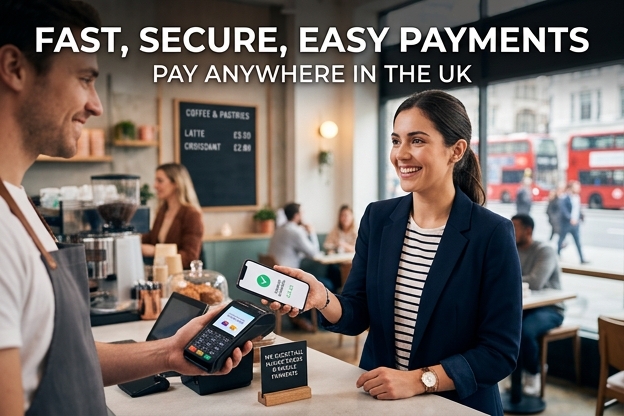
- The user initiates a payment. This can happen by tapping a physical card, typing a virtual card number online, or using a wallet like Apple Pay.
- The merchant sends the authorization request. The merchant’s acquirer forwards the transaction through the card network.
- The issuer processor checks the rules. It evaluates available balance, merchant category, card status, geographic restrictions, spend limits, and fraud signals.
- The transaction is approved or declined. That decision returns through the network back to the merchant within seconds.
- Clearing and settlement happen later. The final transaction amount is posted, funds move between institutions, and program-level reporting updates.
This is where product design and infrastructure collide. A poor ledger design can create false declines. Weak fraud controls can drive chargebacks. Slow dispute handling can kill trust. According to the Federal Reserve’s latest payment studies, card remains a dominant noncash payment method in the United States, which means user expectations for speed and reliability are already very high.
Common Card Issuing Models for Modern Businesses
Not every company should pursue the same issuing model. The right setup depends on regulation, geography, target users, and how much control you need over funds flow.
Bank-Led Card Programs
This is the traditional model. A bank issues the cards, controls major compliance functions, and often limits customization. It can be slower, but it may fit conservative or highly regulated businesses.
Fintech Program Manager Model
Here, a fintech brand designs the customer product while relying on a sponsor bank and issuer processor for the regulated and technical rails. This is the dominant setup for many modern startup card programs.
Embedded Issuing
SaaS platforms, payroll providers, marketplaces, and vertical software companies increasingly embed cards inside a larger workflow. The card is not the product by itself; it improves retention, control, and transaction visibility.
Commercial and Expense Cards
These programs focus on spend management, team controls, virtual cards, recurring vendor payments, and approval policies. They are especially attractive in B2B because they can generate both interchange revenue and workflow stickiness.
Crypto-Linked or Alternative Funding Card Programs
These products connect digital asset balances, stablecoins, or alternative wallets to spending. The challenge is not only technical conversion and settlement. It also involves partner risk tolerance, card network policies, and geographic compliance. That is one of the areas where No KYC Crypto Card Guide often sees businesses underestimate operational complexity.
| Business Type | Typical Card Program Goal | Best-Fit Issuing Model | Key Challenge |
|---|---|---|---|
| Neobank | Primary consumer spending account | Fintech program manager with sponsor bank | KYC, fraud, and retention economics |
| B2B expense platform | Controlled employee and vendor spend | Commercial issuing with virtual cards | Policy logic and ERP integration |
| Gig payroll app | Instant access to earnings | Embedded debit card program | Disbursement timing and customer support |
| Crypto spending platform | Spend linked digital asset balances | Alternative funding card with regulated partners | Partner approval and jurisdictional compliance |
How to Launch a Card Program Step by Step
Founders often ask whether issuing is mainly a legal project, a product project, or a payments project. The honest answer is all three. A successful launch requires sequencing, not just ambition.
- Define the use case. Start with who will use the card, where funds come from, what transactions should be allowed, and what business outcome the card should drive.
- Choose the program structure. Decide whether you need debit, prepaid, credit, closed-loop, open-loop, physical, virtual, or multi-wallet support.
- Select partners. Evaluate sponsor banks, processors, program managers, BIN sponsors, card manufacturers, and compliance vendors.
- Design compliance workflows. Set onboarding policies, sanctions screening, suspicious activity processes, dispute operations, and data retention standards.
- Build ledger and controls. Map available balance logic, transaction states, settlement timing, refunds, reversals, and fee rules.
- Test edge cases. Validate recurring billing, incremental authorizations, foreign transactions, offline scenarios, and wallet tokenization.
- Prepare support operations. Cardholders expect instant card freeze, PIN reset, replacement requests, and clear decline explanations.
- Launch in phases. Start with a pilot cohort, monitor fraud and authorization rates, then scale once economics and support quality hold up.
According to a 2025 Deloitte outlook on digital banking transformation, financial products that combine embedded payments with clear operational governance are more likely to scale profitably than feature-heavy launches that ignore back-office readiness. That tracks with what operators see every day: the card launch is not the finish line; it is the first real stress test.
Compliance, Fraud, and Operational Risks
Card issuing can create strong customer value, but it also introduces risk that many software-first teams underestimate. If your users can spend money, your stack has to withstand fraud attempts, network disputes, identity issues, and policy scrutiny.
Regulatory Responsibility
The sponsor bank usually carries formal regulatory obligations, but the program manager still has major operational responsibilities. You may need to manage onboarding standards, transaction monitoring, customer disclosures, and complaints handling according to partner requirements.
Fraud and Chargebacks
Stolen cards, account takeover, synthetic identities, friendly fraud, merchant disputes, and card testing attacks are common. Weak controls can damage margins quickly.
Operational Failure Points
Some of the worst problems are not flashy fraud events. They are quiet failures: delayed settlement reconciliation, incorrect available balance display, duplicate transaction posting, broken webhooks, or poor decline reason mapping that floods support tickets.
“Every card program eventually learns the same lesson: users judge you by the one declined payment they cannot explain, not by the hundred approvals that worked perfectly.”
Economics, Fees, and Revenue Drivers
A card program can look attractive in a board deck and still fail in the unit economics. The business model depends on your region, card type, user behavior, and partner contracts.
The main revenue source for many debit and prepaid programs is interchange, which is the small portion of each transaction flowing back to the issuer side. For commercial card programs, interchange can be more attractive, especially when spend volume is high and customer acquisition costs are controlled.
Other potential revenue sources include subscription tiers, foreign exchange margin, instant transfer fees, premium card upgrades, and value-added services such as expense controls or analytics. But there are real costs too:
- Sponsor bank and processor fees
- Card manufacturing and shipping
- Fraud losses and dispute handling
- Compliance operations and audits
- Customer support staffing
- Wallet tokenization and network pass-through charges
McKinsey noted in its 2024 global payments research that payments remains a large and profitable pool, but margins increasingly favor players with efficient infrastructure, strong data use, and differentiated customer distribution. Said plainly: a card by itself is not enough. The product around the card has to justify acquisition and support costs.
Real Business Use Cases and a First-Hand Case Study
Card issuing is powerful when it solves a real workflow problem rather than adding a feature for its own sake. Here are some of the clearest use cases:
- Neobanks: Turn stored balances into daily spend and improve account primacy.
- Payroll and earned wage access platforms: Let workers access wages faster.
- Travel platforms: Issue controlled spend cards for teams or trip budgets.
- B2B platforms: Create virtual cards for procurement and vendor payments.
- Marketplaces: Offer seller spending cards tied to earnings balances.
- Crypto-linked products: Give users a bridge from digital assets to merchant payments.
I have seen teams assume they need a massive card program on day one, then later realize the better move is a tightly scoped virtual card launch tied to one revenue-producing workflow. That narrower start usually reveals the true risk profile much faster.
In one project we analyzed at No KYC Crypto Card Guide, a founder wanted a broad global crypto card with physical issuance, instant virtual cards, wallet tokenization, multi-currency support, and rewards. On paper, it sounded compelling. In practice, the partner stack would have created long approval cycles and jurisdiction conflicts. We advised narrowing the initial launch to a limited geography, virtual-only issuance, and stablecoin-funded spending paths with clear partner controls. That reduced launch friction, simplified fraud operations, and gave the team real transaction data before they expanded.
In another case, I worked through a card program review where the biggest issue was not user demand. It was the mismatch between the front-end promise and the settlement model. Users believed their balances were instantly spendable at all times, but some funding events had timing gaps. We recommended a clearer available balance policy, merchant category restrictions during initial rollout, and better decline messaging. The result was fewer support escalations and a much healthier approval-to-complaint ratio within the pilot period.
Where Card Issuing Is Heading Next
Several shifts are changing how card programs are built and how users expect them to behave.
Virtual-First Issuance
More programs start with virtual cards before physical cards. This reduces production delays, supports instant activation, and fits subscription, travel, marketplace, and B2B spend use cases well.
Granular Spend Controls
Businesses increasingly want merchant-level, geography-level, device-level, and policy-driven controls. This is especially important in expense management and embedded finance.
Tokenized Wallet Adoption
Apple Pay and Google Wallet support are no longer nice extras. They are part of the baseline user expectation for many segments.
Deeper Embedded Finance
Card issuing is becoming a native layer inside software products. The strongest products will make cards feel like a natural outcome of the workflow, not a separate banking feature.
Higher Compliance Expectations
As issuing expands into crypto-linked and cross-border models, scrutiny rises too. Partner banks and networks are becoming more selective about monitoring, onboarding quality, and transaction transparency. That likely means fewer shortcuts and more operational discipline over time.
Conclusion
Card issuing is the infrastructure that turns balances, accounts, or approved credit into usable payment credentials. It involves banks, processors, networks, controls, settlement, and customer support working together in real time. The opportunity is large, but so are the execution risks.
For most businesses, the smartest approach is not the broadest launch. It is the most controlled launch with the clearest use case, the strongest partner fit, and the most honest understanding of compliance and support obligations.
No KYC Crypto Card Guide recommends these next actions:
- Map your exact funds flow and approval logic before talking to partners.
- Choose a narrow initial card use case that can prove economics and operational stability.
- Pressure-test compliance, fraud, and support workflows as seriously as product design.
References
- Juniper Research, 2024: Provided market direction on virtual cards and digital issuance growth.
- Deloitte, 2025 digital banking outlook: Informed the discussion on embedded payments, governance, and scalable launch strategy.
- McKinsey global payments research, 2024: Supported the section on payments profitability, infrastructure efficiency, and competitive economics.
- Federal Reserve payment studies: Supported the point that card remains a core noncash payment method in the United States.
FAQ
What Is Card Issuing? A Complete Guide to How Card Issuing Works for beginners?
Card issuing is the process of creating and managing payment cards that let users spend money through networks like Visa or Mastercard. It includes card creation, funding logic, authorization rules, fraud checks, settlement, and cardholder support.
Who actually issues a card: the brand, the bank, or the processor?
Usually, the regulated bank is the legal issuer, while the consumer-facing brand manages the product experience and the processor runs core transaction technology.
Bank: legal issuer and compliance anchor
Brand: customer experience and distribution
Processor: authorizations, controls, and ledger events
Is card issuing the same as payment processing?
No. Card issuing focuses on the cardholder side of payments, including balance access and transaction approval. Payment processing is broader and often refers to the systems that move transaction data between merchants, acquirers, networks, and issuers.
What is the difference between debit, prepaid, and credit card issuing?
Debit cards pull from an account balance, prepaid cards spend from preloaded funds, and credit cards use an approved line of credit that the user repays later.
Debit works well for checking-style products
Prepaid fits controlled or stored-value programs
Credit requires stronger underwriting and lending controls
How long does it take to launch a card program?
A focused virtual card pilot can move much faster than a full physical global rollout. Timelines vary based on partner approvals, compliance design, product scope, and testing complexity, but many programs take several months rather than several weeks.
What are the biggest risks in card issuing?
The biggest risks usually come from weak controls, not from demand problems.
Fraud and account takeover
Compliance failures or partner offboarding
Settlement and ledger mismatches
Poor support during declines and disputes
Can a crypto platform offer card issuing?
Yes, but only with the right regulated partners, funding model, and jurisdictional controls. Crypto-linked card programs face added scrutiny around source of funds, sanctions exposure, transaction monitoring, and partner risk appetite.