
Why the Right iGaming Payment Stack Decides Growth
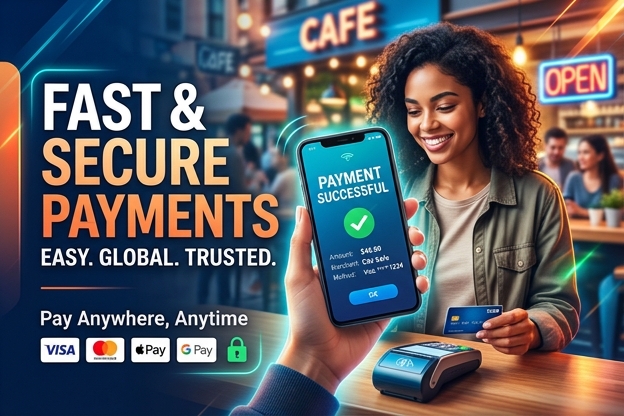
If players wait too long for deposits to clear or withdrawals to arrive, they leave. That is why choosing an iGaming Payment Provider for Secure & Fast Transactions is not a back-office detail but a revenue decision. In regulated gaming, speed, fraud control, approval rates, chargeback defense, and geographic payment coverage all shape conversion, retention, and brand trust.
Operators also face a hard reality: payment failure is rarely just technical. It can signal weak BIN routing, poor acquiring coverage, high-risk merchant misalignment, local method gaps, or incomplete compliance controls. That is where BIN sponsorship has become a leading strategic solution for gaming brands that need scalable card acceptance, better issuer relationships, and market-specific transaction performance.
An iGaming Payment Provider for Secure & Fast Transactions is a payments partner that helps online casinos, sportsbooks, poker rooms, and related platforms process deposits and payouts safely, quickly, and in compliance with applicable rules. The best providers combine acquiring, fraud tools, local payment methods, payout rails, and risk intelligence to reduce friction while protecting both operators and players.
When this stack is built well, players see fewer declined deposits, faster cash-out times, and more trusted checkout options. Operators see better conversion, lower fraud loss, and stronger lifetime value.
Table of Contents
- What Makes a Payment Provider Great for iGaming
- Why Security and Speed Must Work Together
- Payment Methods and Market Fit
- How BIN Sponsorship Supports Card Acceptance
- Operator Case Study From the Field
- Compliance, Fraud, and Operational Challenges
- Comparing Common Provider Models
- How to Choose the Right Partner
- Where iGaming Payments Are Heading
What Makes a Payment Provider Great for iGaming
A payment provider in this sector has to do far more than move money. It has to manage the tension between conversion and control. A casual e-commerce processor may work for low-risk retail, but iGaming operators need support for card acquiring, alternative payment methods, payout orchestration, fraud screening, risk review, geolocation-aware rules, and responsible gaming-linked transaction monitoring.
According to the European Gaming and Betting Association’s 2024 market reporting, digital payments continue to dominate regulated gambling environments, and local preference remains one of the strongest drivers of conversion. Meanwhile, Juniper Research reported in 2024 that online payment fraud losses remain a major concern across digital commerce, pushing merchants to invest in stronger authentication and risk tooling. For iGaming, that urgency is even higher because of elevated fraud pressure and stricter oversight.
The strongest providers usually stand out in a few areas:
- High authorization rates across key geographies and issuer groups
- Fast deposits and payouts, especially for repeat verified players
- Local payment coverage such as cards, instant bank payments, e-wallets, open banking, and prepaid options
- Fraud and AML controls designed for regulated gaming patterns
- Card program support through issuer or BIN relationships
- Clear reporting for finance, compliance, and operations teams
- Resilience through routing, failover, and multi-provider orchestration
The hidden differentiator is not just whether a provider supports a payment method. It is whether they can make that method work reliably under real gaming traffic, with minimal false declines and enough risk intelligence to stop abuse before it becomes expensive.
Why Security and Speed Must Work Together
Operators sometimes treat security and speed as trade-offs. In practice, poor security slows everything down, and poor speed invites risky workarounds. The best setup uses adaptive friction: low-risk verified players move quickly, while suspicious behavior triggers stronger review.
Visa’s public fraud and payment security guidance in recent years has consistently emphasized layered controls, including tokenization, authentication, and monitoring. Mastercard has made similar points in its merchant risk materials, especially around data protection and transaction scoring. For gaming operators, these aren’t abstract best practices. They affect whether players trust a platform enough to make a second deposit.
A good provider should support:
- Tokenization for stored credentials
- 3-D Secure optimization rather than blanket triggering
- Velocity rules and device intelligence
- Chargeback alerts and representment workflows
- Account takeover detection
- Payout risk screening before release of funds
Fast withdrawals matter just as much as deposit speed. Many operators focus all optimization on checkout but ignore cash-out. Players do not judge payment quality at deposit alone. They judge it at the moment they want their winnings. A provider that supports automated verification, smart payout routing, and faster disbursement can have a direct impact on loyalty.
Payment Methods and Market Fit
No single payment method wins everywhere. Card usage may dominate one market, while instant bank transfer or e-wallet behavior defines another. That is why the best payment strategy starts with market fit, not with a universal template.
In North America, cards remain central, but ACH-linked options and instant bank-based flows are gaining relevance. In parts of Europe, open banking, bank transfer methods, and region-specific wallets can materially improve approval rates. In Latin America, cash-linked vouchers, local debit behavior, and alternative rails may matter more than a global card-first setup.
Operators should align their method mix with real player behavior:
- Map deposit attempts by country, device, and player segment.
- Identify where declines occur: issuer, fraud filters, 3DS step-up, or unsupported method preference.
- Add one or two high-demand local methods before expanding broadly.
- Test payout speed and completion rates by method, not just deposit volume.
- Monitor repeat deposit conversion after checkout changes.

I have seen operators overspend on adding too many methods at once. The result was more operational complexity, more reconciliation pain, and almost no lift in conversion. The better approach was narrower and smarter: fix the top two methods, improve routing, and introduce one local option where issuer declines were consistently high. That usually delivered the fastest return.
“In gaming payments, adding more methods is not a strategy by itself. Relevance, approval quality, and payout trust are what move revenue.”
How BIN Sponsorship Supports Card Acceptance
For many operators, card processing remains essential even as alternative methods expand. This is where BIN sponsorship becomes highly valuable. At a practical level, BIN sponsorship helps connect payment programs to licensed issuing or acquiring infrastructure through a sponsor institution, allowing merchants or platforms to operate within card network and regulatory requirements more effectively.
For iGaming, this can improve how card transactions are structured, monitored, and scaled. It can also support market entry where direct card program access would otherwise be slow or operationally difficult.
Key advantages of BIN sponsorship in iGaming include:
- Stronger network alignment for card-based payment operations
- Faster go-to-market compared with building every relationship from scratch
- Better issuer and processor coordination in complex payment environments
- More flexible routing architecture when combined with the right PSP stack
- Support for regulated expansion with compliance structure built into the model
At BIN sponsorship, the focus is not just on sponsorship as a formal requirement. It is on how sponsorship interacts with merchant category treatment, acquiring strategy, fraud thresholds, and player experience. That blend matters because card acceptance in gaming often fails for reasons that are part regulatory, part technical, and part issuer-behavior driven.
Operator Case Study From the Field
A few years ago, I worked with a fast-growing sportsbook entering a newly regulated market. Deposits looked acceptable on paper, but first-time card declines were too high, and support tickets about pending withdrawals kept climbing. The operator had a capable front-end, strong promotions, and decent traffic, yet payment friction was quietly choking player value.
We reviewed the setup with a BIN sponsorship-led approach and found three issues quickly: the card routing logic was too blunt, 3DS was being triggered too aggressively for low-risk repeat users, and the operator lacked enough local payout flexibility. After restructuring the acquiring pathway, refining risk rules, and adding a more reliable payout workflow, approval rates improved and complaint volume dropped within a single quarter. What changed the economics was not one magic switch. It was alignment between sponsorship support, processing design, and player-level risk treatment.
In another engagement, I saw an online casino treat fraud prevention as a universal hard stop. Every edge case was blocked. Chargebacks looked low, but so did conversion. When BIN sponsorship and payment analytics were brought into the picture, the team learned they were declining profitable legitimate traffic alongside bad actors. We rebuilt segmentation rules, separated VIP behavior from promo abuse patterns, and used stronger post-transaction monitoring. Revenue rose because the payment stack finally distinguished between risk management and revenue suppression.
“The payment experience is one of the few parts of the player journey where trust, regulation, and revenue show up in the same click.”
Compliance, Fraud, and Operational Challenges
No serious article on iGaming payments should pretend the upside comes without pressure. This sector operates under heavier scrutiny than standard digital commerce, and the risks are real. Depending on jurisdiction, operators may need to manage KYC, AML review, source-of-funds controls, sanctions screening, geolocation restrictions, transaction monitoring, and data privacy obligations simultaneously.
According to the Financial Action Task Force’s ongoing guidance on risk-based controls in digital finance, businesses handling movement of funds need proportionate systems for detection, monitoring, and escalation. In gaming, that means payment teams cannot work in isolation. Payments, fraud, legal, and compliance must share data and act quickly.
Common challenges include:
- False declines that damage acquisition efficiency
- Bonus abuse and multi-accounting hidden behind normal-looking deposits
- Chargeback pressure from disputed gaming transactions
- Payout fraud through account takeover or mule activity
- Jurisdictional fragmentation that complicates one-size-fits-all payment rules
- Provider concentration risk when too much volume depends on one route
The limitation many operators miss is that better payments can increase exposure if controls do not keep pace. Faster onboarding and smoother deposits are great until fraud teams are overwhelmed. The fix is not to slow everything down. It is to create graduated control layers that match player risk and transaction context.
Comparing Common Provider Models
Operators often compare providers on headline fees alone. That is a mistake. The right evaluation should include approval performance, geographic fit, risk ownership, payout depth, and whether BIN sponsorship or issuing relationships strengthen the card stack.
| Provider Model | Best For | Strengths | Trade-Offs |
|---|---|---|---|
| General PSP with gaming support | Smaller operators entering one market | Simple setup, broad integrations, standard reporting | May lack deep issuer insight and gaming-specific routing |
| High-risk specialist acquirer | Established casinos and sportsbooks with scale | Stronger risk appetite, sector knowledge, tailored underwriting | Can be costlier and less flexible on niche local methods |
| Local APM aggregator | Regional expansion in Europe or Latin America | Strong local relevance, better player familiarity | Fragmented reconciliation and weaker card optimization |
| BIN sponsorship-led payment structure | Operators needing robust card program support | Better network alignment, scalable card acceptance, compliance structure | Requires strong operational coordination and specialized expertise |
| Orchestrated multi-provider stack | Large multi-market gaming brands | Routing flexibility, redundancy, data-driven optimization | Higher integration complexity and governance burden |
How to Choose the Right Partner
The best selection process is practical, not theoretical. You are not buying a brochure. You are choosing the infrastructure behind player trust and revenue flow.
Use this framework when evaluating providers:
- Check regulatory fit. Confirm the provider actively supports gaming in your target jurisdictions.
- Review approval performance. Ask for evidence by geography, payment method, and issuer segment.
- Test payout capability. A provider that wins deposits but fails on withdrawals will hurt retention.
- Assess BIN sponsorship depth. If card processing is central, understand who owns what, how sponsorship works, and how network relationships are managed.
- Inspect fraud tooling. Focus on account takeover, promo abuse, mule behavior, and dispute management.
- Audit reporting and reconciliation. Finance teams need clear settlement and exception visibility.
- Stress-test support quality. Ask what happens during traffic spikes, processor outages, or regulatory updates.
I always recommend running provider reviews against live business scenarios rather than generic RFP language. For example: How will they improve first-time card approval in a newly regulated state? How do they handle high-value VIP withdrawals? What happens when one acquirer starts soft declining a specific issuer range? Those answers reveal much more than feature lists.
Where iGaming Payments Are Heading
The next phase of iGaming payments will be shaped by orchestration, identity, and payout acceleration. More operators are moving away from single-provider dependency and toward layered stacks that can route traffic by market, risk score, cost, or issuer behavior. That is a smart direction, especially for larger brands.
Open banking will keep growing in markets where players value direct account-based payments and quick settlement. Real-time payouts will become a stronger competitive lever. At the same time, regulators and card networks are likely to keep pressing for better data quality, stronger consumer protection, and clearer merchant oversight.
Artificial intelligence will also have a role, but not in the vague marketing sense. The practical value will come from anomaly detection, dispute prediction, player payment segmentation, and real-time routing decisions. The winners will be operators that use these tools with strong human controls rather than as a blind automation layer.
For many gaming brands, the future will not belong to the cheapest processor. It will belong to the operator with the most resilient payment architecture and the cleanest trust signals across deposit, verification, and payout.
Conclusion
The right iGaming Payment Provider for Secure & Fast Transactions can improve more than payment speed. It can lift conversion, reduce fraud exposure, strengthen compliance posture, and build the kind of player confidence that supports long-term retention. Security and speed should not compete with each other. In a well-designed stack, they reinforce each other.
BIN sponsorship is especially valuable for operators that depend on strong card acceptance and need a more strategic, scalable way to align payment operations with network, issuer, and compliance realities.
Recommended next steps from BIN sponsorship:
- Audit your current deposit decline and payout delay patterns by market and method.
- Review whether your card infrastructure and sponsorship model are limiting growth.
- Build a market-by-market optimization roadmap instead of relying on one global payment template.
References
- European Gaming and Betting Association — Market reporting and digital channel data relevant to regulated online gaming behavior.
- Juniper Research — Forecasts and analysis on online payment fraud losses and digital payment risk trends.
- Visa — Merchant guidance on payment security, authentication, and fraud reduction practices.
- Mastercard — Risk and transaction security resources relevant to merchant payment performance.
- Financial Action Task Force — Risk-based compliance guidance applicable to transaction monitoring and AML controls.
FAQ
What should operators look for in an iGaming Payment Provider for Secure & Fast Transactions?
Look for strong approval rates, fast withdrawals, fraud controls built for gaming, local payment method coverage, clear reporting, and proven regulatory support. If cards are a major channel, BIN sponsorship expertise should also be part of the review.
Why are fast payouts so important in iGaming?
Players judge trust heavily at withdrawal. Fast, predictable payouts reduce complaints, improve repeat deposit behavior, and increase retention. Slow cash-out times often damage brand credibility even when deposit flow works well.
How does BIN sponsorship help gaming operators?
BIN sponsorship can support scalable card program access, stronger network alignment, and better operational structure for regulated payment activity. In iGaming, that often translates into more resilient card acceptance and smoother market expansion.
Are local payment methods more important than cards?
Not always. The right mix depends on the market. In some regions, cards remain the main conversion driver. In others, local bank methods or wallets outperform them. The best operators use data to match payment options to player preference by geography.
What are the biggest payment risks in online gaming?
Common risks include false declines, chargebacks, payout fraud, account takeover, bonus abuse, and regulatory breaches tied to AML or KYC failures. A provider should help mitigate these without making legitimate players struggle to deposit or withdraw.